
article The Week I Spent Crying with Farmers
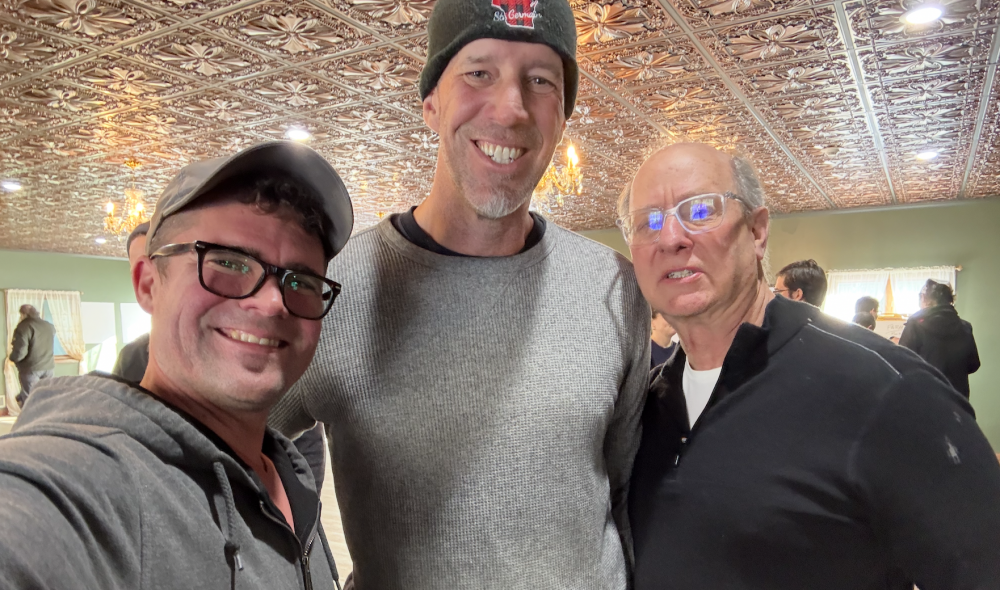
Last week I spent an entire week in a dorm with a bunch of farmers. At one point standing in a circle… crying.
Seriously. If you had told me that ahead of time, I probably wouldn’t have gone!
This was the Farmpreneur program. A week-long “bootcamp” for farm businesses focused on strengthening the business side of what founders are building. I wrote more about my interview for the program here.
It’s hard to describe the experience without starting with where we were. January in the Midwest. Bitter cold. The kind that makes you feel boxed in before you even step outside.
We all stayed together for nearly a week at The Abbey at Otter Creek, a former convent once run by Swiss nuns, set up in a dorm-style bed-and-breakfast layout. Shared bathrooms. Tight hallways. People bumping into each other constantly. Coffee in the mornings together. Late nights when everyone was fried. And long stretches in between where everyone was holding their business in their head while also trying to be present.
Normally that sounds like a recipe for irritation. It did the opposite.
Being in the same space for days created connection fast. You couldn’t hide. You couldn’t stay “professional” for long. You saw people as humans first, operators second.
And that changed everything.
What surprised me most was the group itself. I expected mostly early-stage farmers learning the basics. That wasn’t it. Almost everyone had already built something real. A working farm. A brand. Customers. Revenue. Systems that function, even if they’re held together with grit and late nights.
The common thread wasn’t ambition. It was this:
We’ve already built something special. Now we’re trying to take it to the next level.
And that next level is hard. Because it means the same transition for almost everyone. Moving from being “the farmer” to being the business owner. And realizing you can’t do it alone.
The people in the room
The week was guided by Will Rosenzweig, a soft-spoken leader who has spent his career in food. He founded The Republic of Tea and later went on to educate, mentor, and invest across the food system. He wasn’t loud or performative. He asked questions that made you think and then let silence do its work.
Throughout the week, emotion showed up in unexpected ways. Not just once, but repeatedly. People shared hard things. Special things. Failures. Wins. The weight of trying to build something meaningful in a system that often doesn’t support it.
One of the sponsors of the event and guest speakers was Dr. Rivard. Dr. Rivard was one of the early ER doctors in Chicagoland and saw firsthand how many of the conditions filling emergency rooms were tied to diet, chronic disease, and a food system disconnected from health. That experience eventually led him to co-found Iroquois Valley, a mission-driven farmland investment company that helps regenerative and organic farmers access land and long-term financing so they can grow clean food for more communities. In other words, instead of treating symptoms at the hospital, they are investing upstream in the health of soil, farms, and the food people eat every day. Crazy enough, Dr. Rivard and his co-founders were best friends growing up in Kankakee, just 20 minutes south of our farm.
Dr. Rivard was deeply moved by the work happening in the room and the collective sense that real change is possible when people commit to rebuilding food from the ground up. He was generous with encouragement and honest about what it meant to see so many people pushing in the same direction.
And yes, tears continued. The program leaders even joked that most groups don’t cry this much. Maybe it was because we were essentially trapped inside a dorm for seven straight days while it was brutally cold outside. But I think it was something else.
Everyone in that room was carrying real weight. And for the first time, many of us realized we weren’t carrying it alone. We finally had space to slow down, breathe, collaborate, and share what this work actually feels like.
That’s not my personality. I learn by doing, not by sitting in rooms. But being around people carrying similar pressure made it impossible to pretend everything was fine. You realized quickly you weren’t alone.
The transition everyone is facing
The big theme for me, and honestly for most of the room, was a kind of graduation.
Moving from farmer to business owner.
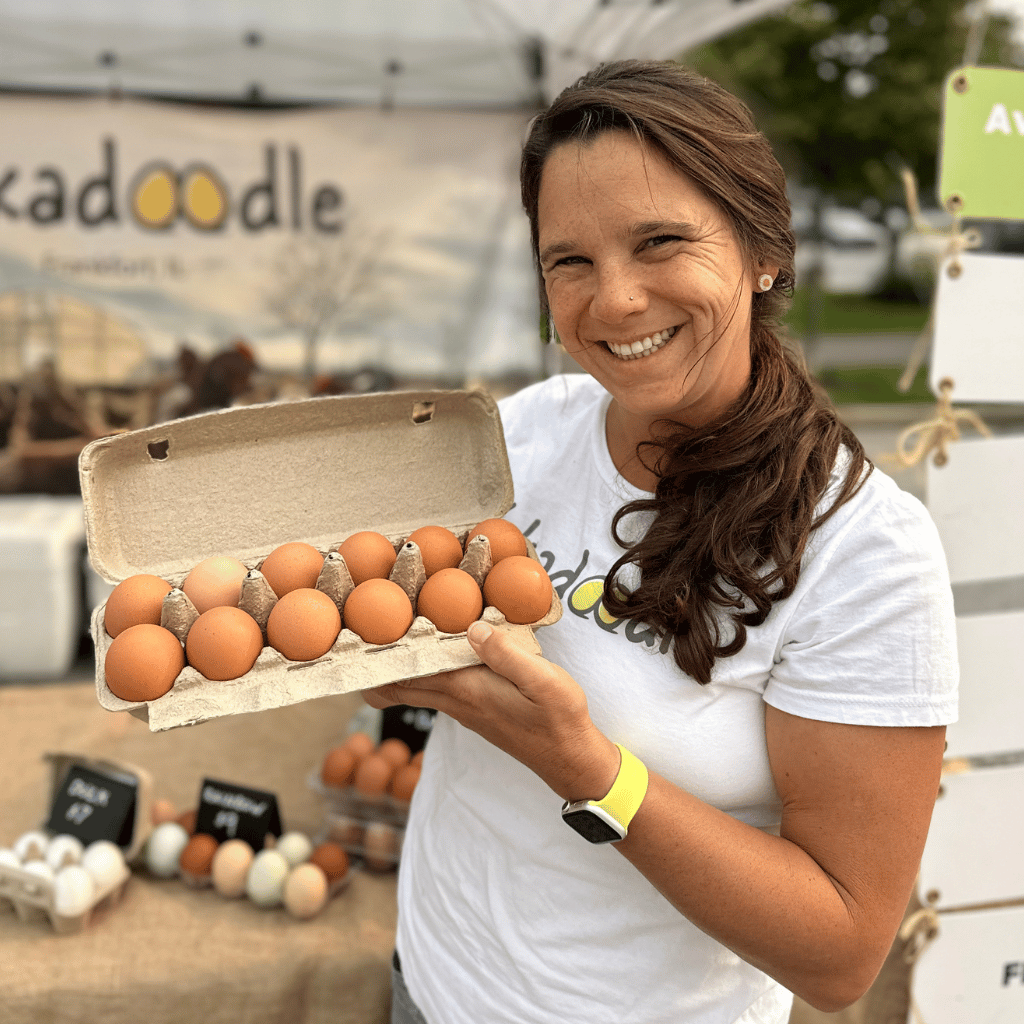
For me, that meant facing something I tend to avoid. The numbers. The finances. The uncomfortable (and emotional) work of money. I can outwork problems. I can build systems. But the next stage of Kakadoodle requires me to plant myself in that space and stay there.
Hire a bookkeeper. Stabilize the farm side. Find someone who can run it well. Work on the business, not just in it.
I knew pieces of that before. The week just brought it into focus.
Pitch day
The entire week built toward pitch day.
Seventeen participants. Each with ten minutes to present what they’re building and seven minutes of feedback from a panel of food and agriculture experts.
I pitched our plan to bring egg bites to market and raise $250,000 to do it.
Not because we’re trying to become an “egg bite company,” but because value-added products like that can strengthen a local ecosystem, stabilize revenue, and support the broader flywheel of farm, logistics, and marketplace.
I was scheduled second to last. I was nervous all day leading up to it. Around 5pm it was finally my turn. I survived, though I did run over time.
The feedback was incredibly encouraging. Again, holding back tears. The positives were consistent. The story resonates. The vision is clear. People understand the problem we’re solving and the traction we’ve built.
The critiques were also clear. I packed too much into the pitch. Personal story. Egg bites. Master plan. It crowded the core narrative. The message was simple: cut harder and make the ask unmistakable.
Here's the pitch deck if you're interested in seeing it. Take a look at the comments for the talking points. It won't make much sense without them.
While I was away…
One of the most meaningful moments happened during the pitch when I mentioned that Kakadoodle had its biggest week ever while I was gone. Online orders were up. The farm market sales doubled in just a week.
The room stood and cheered.
Because it connected everything.
The conversations. The emotion. The strategy. And then back home, real families ordering food for the week.
A customer’s weekly order might feel small. But it keeps this system moving. It supports farmers. It builds infrastructure. It helps us prove that this can work. So thank you all. 🙏