article We Can't Afford to be Farmers
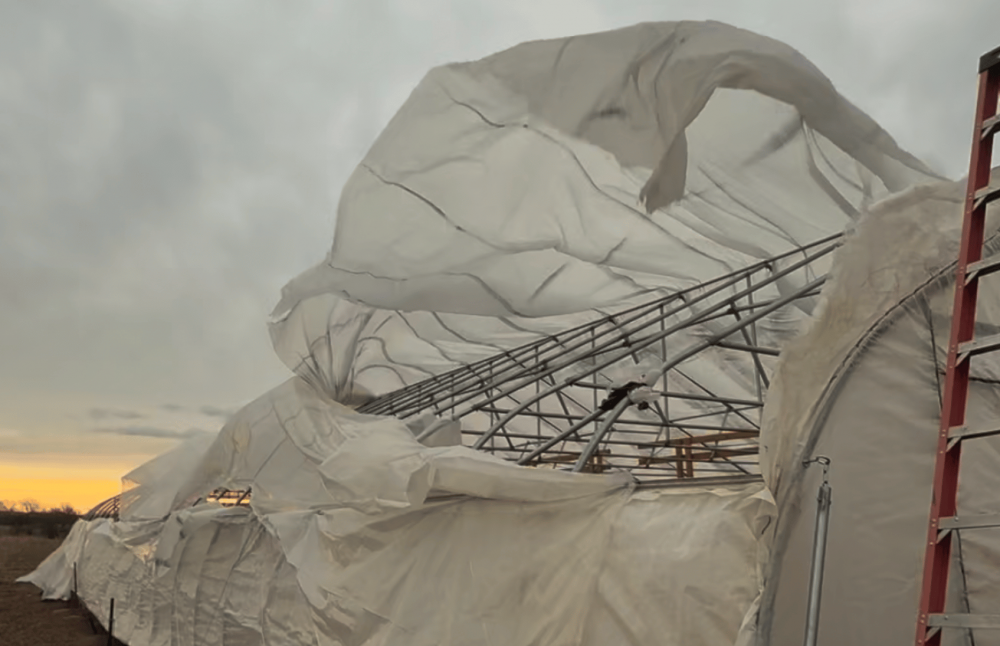
Last week the wind ripped the plastic off the top of our high tunnel.
The gusts were strong enough that there was really nothing we could do. I was standing at the farmers market talking with customers while the plastic was literally flapping across the field. It was one of those moments where you just have to accept reality. The wind is stronger than you are.
Eventually you walk back out to the farm and start cleaning up the mess.
Moments like this seem to happen over and over again in farming. Something breaks. Something blows away. Something gets sick. Something dies. Something that was supposed to work… doesn't.
A lot of farming ends up being crisis control.
Part of this is simply the nature of the job. Nature introduces variables that no spreadsheet can predict.
But part of it is also that many farmers, especially newer ones, are building with limited resources. You start with what you can afford. You patch things together. You improvise infrastructure. You make things work.
If money were no object, maybe you could design the perfect housing systems and eliminate some of the chaos. But most farmers do not start with unlimited capital. They start with creativity, borrowed equipment, used materials, and a willingness to solve problems as they come.
That is the reality of farming for most of us.
Farming Has Always Been a Difficult Business
Earlier this week I was visiting Prairie Fruits Farm and Creamery outside Champaign. Lauren, the farmer there, said something that stuck with me.
She said farmers don’t usually make their money from farming.
They have to build something else alongside the farm that supports the farm.
In her case it's baby goats and a liquor license 🍻. People come to the farm for experiences, events, meals, and wine. Those activities help support the farm itself.
The farm alone rarely carries the financial weight.
This idea was echoed in a conversation I had with Olivia, one of our advisors. She pointed out something that many people outside agriculture don’t realize: since the end of subsistence farming, farming itself has rarely been consistently profitable on its own.
Large parts of the agricultural economy rely on government support systems to stabilize it.
That doesn’t mean farmers are not working hard or taking risks. They absolutely are. But the economics of farming have always been difficult.
The Sheep That Probably Won’t Happen
Right now the best thing we could do for our land would probably be to bring in sheep.
If everything went perfectly, it would be a win across the board.
The sheep would graze the pasture and improve the soil. They would cycle nutrients back into the land. We could potentially lamb them, process some for our market, and sell others.
On paper it looks like a profitable enterprise.
But farming is rarely about what happens on paper.
What if the sheep get sick? What if predators become an issue? What if the lamb market collapses? What if we cannot move the animals when we need to?
Every one of those is a variable.
And right now our business cannot afford more variables.
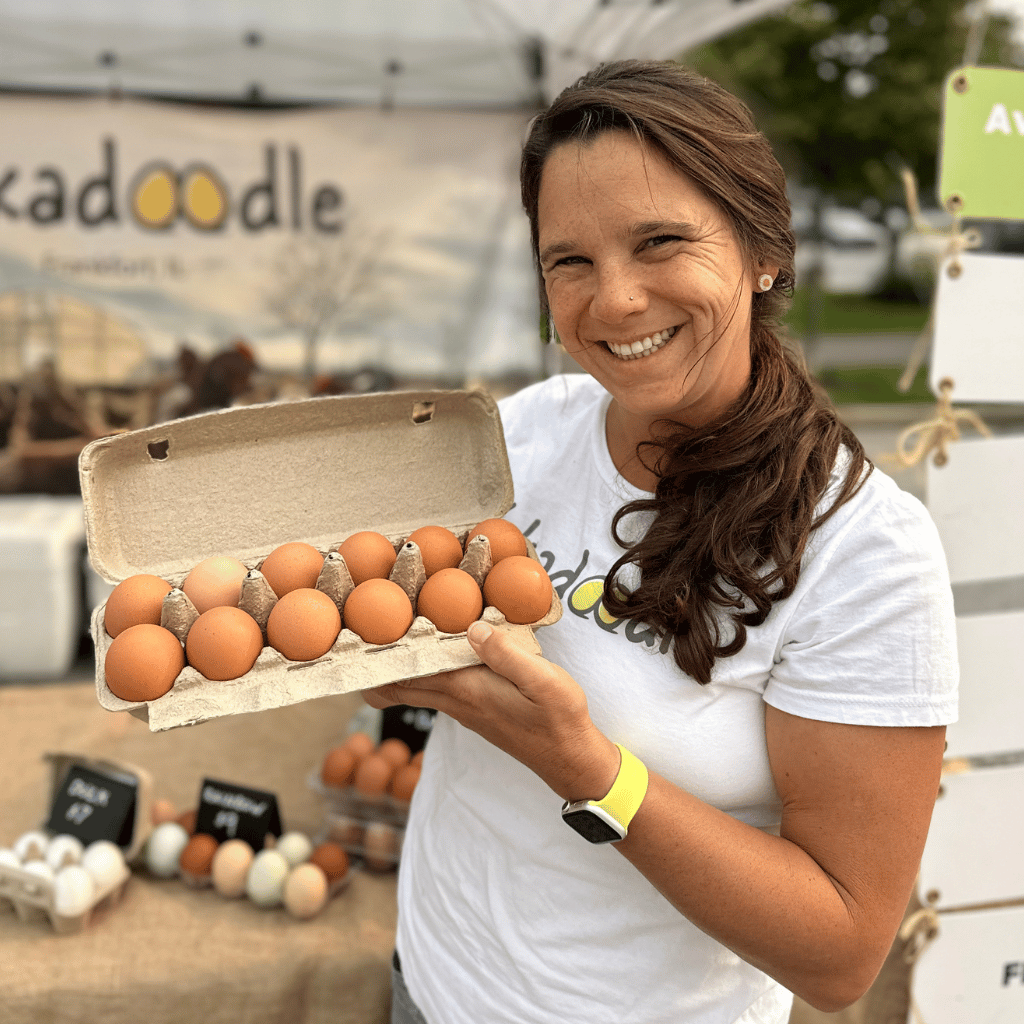
Over the past year Kakadoodle has taken several big hits. Bird flu wiped out our flock. Grants that we were counting on were frozen. Like many farms, we have absorbed the financial shock of events completely outside our control.
The good news is that 2026 is shaping up to be a rebuilding year. The farm market is growing. Egg Bites are showing real promise. Our marketplace continues to expand.
But we are still climbing out of a hole created by those past variables.
Which means the honest truth right now is this:
We cannot afford to be farmers.
At least not in the traditional sense.
So instead of buying sheep ourselves, we are considering leasing pasture to a shepherd who can run that enterprise independently. They take on the risk and variables of raising the animals. The land still gets the benefit of grazing.
Sometimes the best decision in farming is knowing which risks you cannot afford to take.
Industrial Farming vs. Regenerative Farming
While the wind was tearing through the farm last weekend, the conversation at the market turned to another reality of agriculture.
Industrial farming has become incredibly efficient.
Our neighboring farm grows corn and soybeans. Large crews arrive with massive equipment. They plant. They spray. They harvest.
They might only be on the land a handful of days each year.
It is a highly engineered system that has been refined for decades. It is predictable. It is scalable. And it is supported by enormous infrastructure.
That system now dominates American agriculture.
Regenerative farming looks completely different.
Instead of simplifying the land down to a single crop, regenerative systems try to work with the complexity of nature. Multiple species. Rotational grazing. Diverse crops. Soil biology.
Nature becomes the playbook.
But nature does not follow schedules.
Nature introduces variability.
A storm hits. A disease spreads. A drought shows up. A predator finds your flock.
Managing those variables is the work.
And while industrial agriculture often has safety nets built into the system, regenerative farmers often shoulder much more of the risk themselves.
That does not mean conventional farmers face no risk. Farming is always risky. But regenerative farms operate in a system that has far fewer financial guardrails.
Building a Market That Makes Farming Possible
All of this brings me back to why we started Kakadoodle in the first place.
The long term solution is not just better farming techniques.
The solution is building a market.
A market made up of people who choose to support small regenerative farms with their grocery dollars. A market that values food grown without chemicals. A market that understands that farming with nature takes more work, more care, and often more cost.
If enough consumers choose that path, something important happens.
Farming itself becomes viable again.
Not through subsidies. Not through massive scale. But through trust between farmers and the people they feed.
That is the system we are trying to build.
And yes, along the way the wind will probably keep blowing plastic off high tunnels.
But maybe one day we will have a food system where the farmers fixing that plastic actually have a chance to make a living doing it.