article What to Expect in 2026
If 2025 was the year the cracks became visible, 2026 feels like the year we learn how to live with them.
The systems that showed stress last year — food, funding, trust, labor, technology — aren’t snapping back. They’re settling into a new baseline. What felt like disruption now feels like normal.
Like last year, I want to start wide and slowly narrow — from the country, to Kakadoodle, to me personally.
⸻
1. Nationally: disease and consolidation keep exposing fragility
In 2026, the U.S. food system won’t suddenly feel sturdier.
Disease pressure isn’t going away. Bird flu, COVID, and whatever comes next continue to create sudden, uneven disruption. At the same time, consolidation is likely to increase as capital concentrates and smaller operators struggle with risk and market demand.
That combination (recurring disease layered onto a highly centralized system) is inherently brittle. When one node fails, the impact is national.
2. Food access organizations will be pushed toward self-sustainability
In 2026, shifts in government funding for food systems (especially those serving underserved communities) will force a change.
As grants become less predictable, nonprofits and food access organizations will have to look beyond traditional funding models. That pressure will push many to become more self-sustaining, more creative, and, whether they like the word or not, more entrepreneurial.
This won’t replace public support, but it will reshape how these organizations operate. Earned revenue, partnerships, and hybrid models will matter more.
The organizations that adapt won’t just survive funding cycles. They’ll become more resilient to them.
3. Consumers: trust keeps quietly replacing convenience
I don’t think consumers are “waking up.” They’re adapting.
In 2026, I expect people to keep making quieter, more intentional food choices. Less driven by labels. More driven by simple questions they trust: Where did this come from? Who stands behind it? How does it feel feeding my family?
Ultra-processed food isn’t going anywhere, but it keeps losing cultural momentum. The center of the grocery store feels less like default and more like compromise — even if nobody says it out loud.
4. Technology: AI becomes boring (and that’s good)
In 2025, AI felt magical. In 2026, it becomes normal.
The advantage won’t be having AI. It’ll be how deeply it’s integrated into thinking, planning, and execution. Small, focused teams that treat AI like an operating layer — not a bolt-on tool — will continue to punch far above their weight.
Leverage compounds quietly.
4. Kakadoodle: stabilize the core, expand naturally
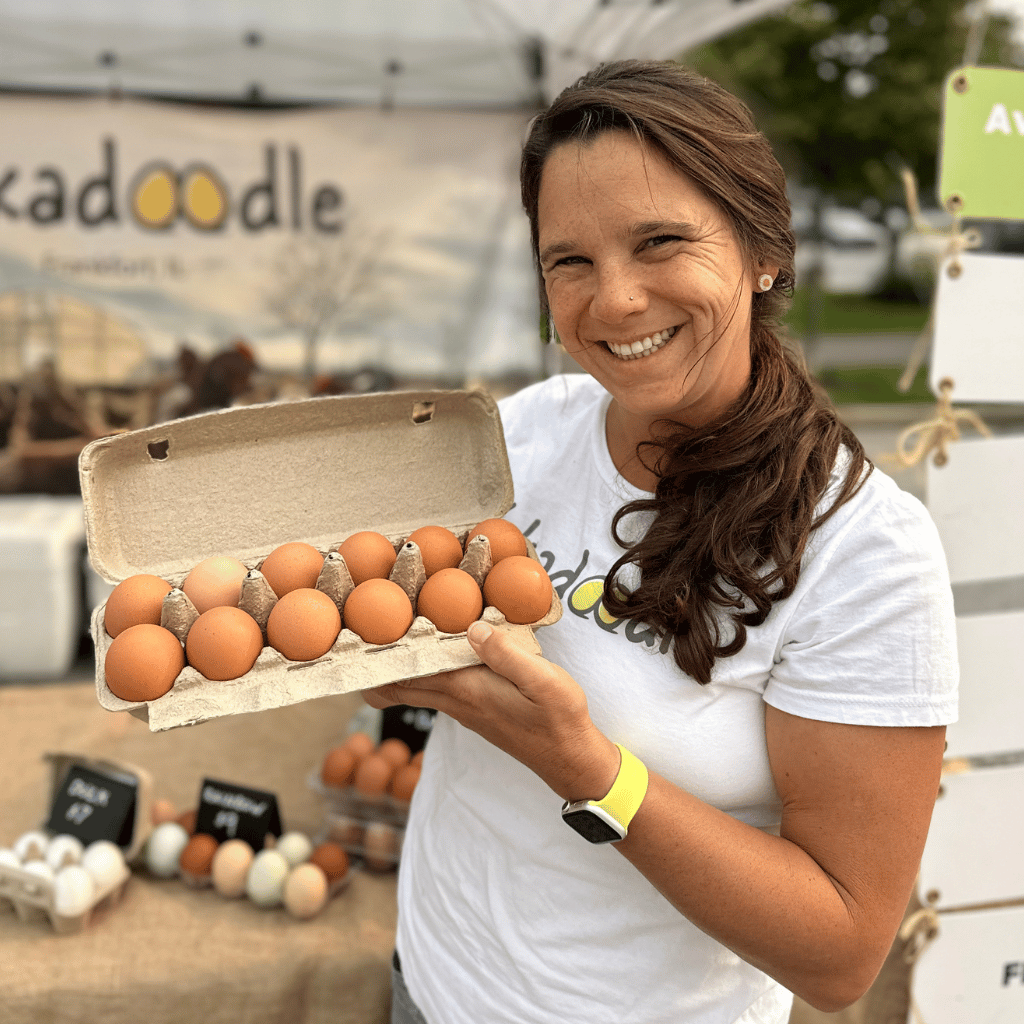
For Kakadoodle, 2026 looks like stabilization and expansion happening at the same time.
Not chasing growth for its own sake, but letting the right things compound. Growing at the pace that our customers set. Small, deliberate experiments — bullets, not cannonballs — followed by real follow-through when something works. Clearer filters for what we say yes to, and faster no’s when things don’t align.
A few specific things I expect to happen:
-
Egg Bites make their way onto grocery store shelves.
Not everywhere. Not overnight. But enough to prove that a clean, chemical-free product rooted in regenerative values can work in traditional retail without losing its integrity. -
On-farm sales 4x to roughly $20k/month.
On-farm retail becomes a meaningful, steady part of what we do — deepening trust, diversifying revenue, and turning the farm into an asset instead of a cost center. -
Online sales grow ~50% to around $70k/month.
That puts us within striking distance of our $100k/month goal and, more importantly, proves that a local food system can stand on its own two feet without government assistance.
Success in 2026 isn’t flashy. It looks like fewer emergencies (hopefully!), cleaner numbers, and steady, earned growth.
5. Personally: practicing trust, not just talking about it
If 2025 taught me how little control I actually have, 2026 will test whether I can live that lesson.
As stakes rise, the temptation is to grip tighter and confuse responsibility with control. I suspect the real work this year is the opposite: better boundaries, clearer priorities, and deeper trust in God with outcomes I can’t engineer.
My job in 2026 isn’t to predict the future or force it into shape. It’s to steward what’s been entrusted to us as faithfully as I can — and try not to mess it up by over-controlling it.