article Why the Small, Boring Things Matter
In my last newsletter, I mentioned how were focusing on “the boring things.” No hacks. No wild promotions. Just the quiet, unglamorous work that actually moves things forward. A few days later, someone asked me a simple question: So... what are those boring things, exactly? I tried to answer, and I stumbled through it. The question stuck with me.
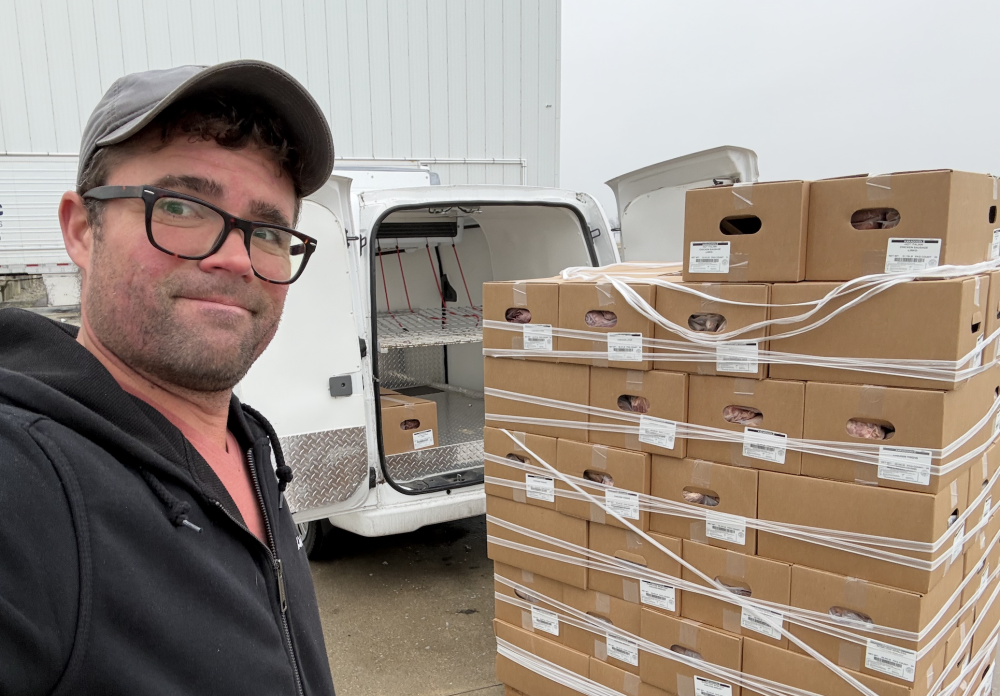
Then a couple days ago, I was driving to Ohio to pick up a batch of wonderfully tasty and so amazingly good for you pasture-raised chicken from the processor. Long drive, lots of time to think. And somewhere in the middle of Indiana, I remembered a concept from one of my favorite books, Good to Great by Jim Collins. It's called "The Flywheel." And I think it could be the answer to "what are those boring things?"
The Flywheel: A Simple Idea from Big Companies
The flywheel idea is simple - Great companies are not built by one big moment. They are built by lots of small, consistent actions that slowly build momentum. Here's Collin's description:
Picture a massive metal disk mounted horizontally on an axle, about 30 feet in diameter, 2 feet thick, and weighing about 5,000 pounds. Now imagine that your task is to get the flywheel rotating on the axle as fast and long as possible. Pushing with great effort, you get the flywheel to inch forward, moving almost imperceptibly at first. You keep pushing and, after two or three hours of persistent effort, you get the flywheel to complete one entire turn. You keep pushing, and the flywheel begins to move a bit faster, and with continued great effort, you move it around a second rotation. You keep pushing in a consistent direction. Three turns ... four ... five ... six ... the flywheel builds up speed ... seven ... eight ... you keep pushing ... nine ... ten ... it builds momentum ... eleven ... twelve ... moving faster with each turn ... twenty ... thirty ... fifty ... a hundred. Then, at some point—breakthrough!
Jeff Bezos has famously said that this flywheel concept shaped how Amazon was built. Again, not with flashy launches or shortcuts, but by doing the same few things well, again and again.
And with such a powerful endorsement, I'm sure Jim had a million people asking him "How do I build a flywheel for my company!?" So he actually wrote a follow up book called "Turning the Flywheel" that helped companies answer exactly that question. The first step: look back and see what things have worked well, and what things haven not worked so well. So being that I had a few hours to kill on the road, I turned to ChatGPT to help me brainstorm all of the things that has, and has not worked. This is what I (/we?) came up with:
What has worked
Here’s what’s quietly moved the needle for us:
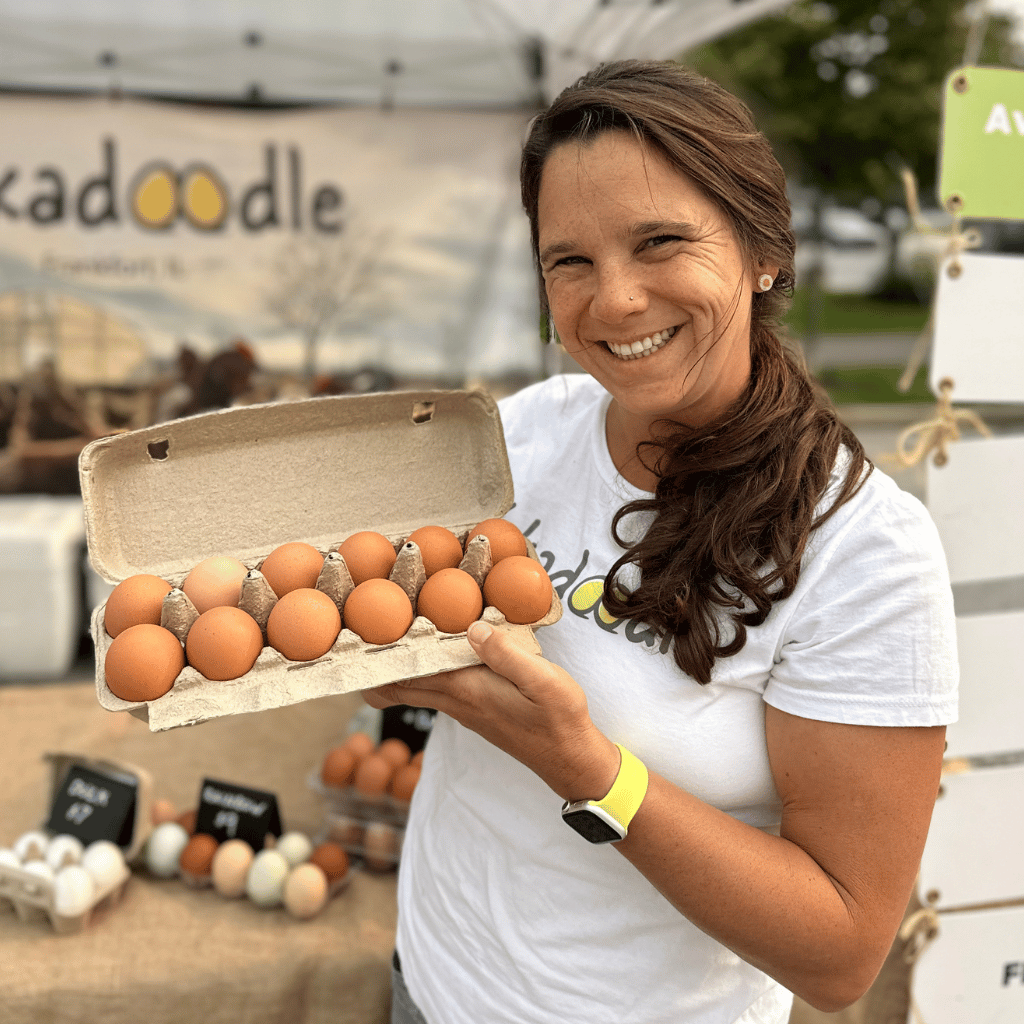
- Eggs done right built trust faster than anything else we’ve tried
- Friends sharing eggs with neighbors turned out to be one of our strongest referral channels
- Farmers markets gave us real conversations, not just transactions
- Bright yellow bags made it easy to recognize a Kakadoodle delivery on a porch or at pickup
- Simple language like “chemical-free” landed harder than any clever marketing line
- Being open about our cancer story helped people understand why this isn’t just a business to us
- Egg bites showed us how a simple value-added product can create excitement and provide new revenue streams
What hasn't worked
When we talk about what didn’t work, this is where it gets a little more real. Here are some of the things we tried that, in hindsight, pulled more energy than they gave back.
- Chasing grants and government programs: The revenue helped in the short term, but it pulled us away from what we do best, building a reliable system for families, not moving bulk food through institutions.
- Trying to grow too many things at once: Flowers, harvest packages, seasonal bundles, produce experiments. Each one had heart behind it, but together they created complexity without real momentum.
- Paid advertising before we were ready: We tried running ads without the time or focus to really do them well. It felt like throwing darts instead of building something repeatable.
- Overextending the farm too fast: We pushed scale before our systems were ready. Bird flu made that painfully clear, but the deeper lesson was about building resilience before speed.
- Complicated sourcing models: Early on, we paid too much for some products and didn’t fully understand our margins. We learned that trusting farmers also means building a model that actually works for everyone.
- Doing things that felt good but didn’t build the system Too many community events. Too many side projects. Great intentions, but they didn’t strengthen the core of what Kakadoodle needs to be.
There’s one more part of this that’s harder to talk about, but it matters. For a long time, we underestimated how hard it is to lead people well, not because we didn’t care, but because we didn’t yet have the experience to match the responsibility. We were learning how to build systems at the same time we were learning how to support a growing team, and those two things don’t always grow at the same pace. Sometimes we asked too much too fast. Sometimes we weren’t clear enough about expectations. Sometimes we built roles before we fully understood what the work really required. None of that came from a lack of heart. It came from building something new while learning how to lead inside it. That was one of the hardest and most emotional lessons for us, and one of the most important.
Kakadoodle's Flywheel (ie Boring Things)
After taking a look at all of the things that have and have not worked, Collins suggest going through a series of exercises to reveal the components that represent your flywheel. I believe that these components could be the "boring things" that we're after. So after continuing what is now an exceptionally long conversation with AI working through the exercises, here's what I (/we?) came up with:
- Provide food people can trust: This is where everything starts. If the food isn’t something you feel good about feeding your family, nothing else matters. For us, that means being clear about where food comes from, how it’s raised, and why it’s different. No spin. No hiding behind labels. Just doing the hard work to earn trust one delivery at a time.
- Create a modern customer experience: Great food alone isn’t enough anymore. People are busy. Life is full. If ordering, managing deliveries, or getting help feels clunky, even the best food becomes a chore. A modern experience means things just work. Easy ordering. Clear communication. Fewer headaches. Less friction between you and good food.
- Leverage predictable systems: Trust and experience only hold if there’s something solid underneath them. Predictable systems are the quiet engine. The routines, processes, and checks that make sure what worked last week works again this week. Not heroic saves. Not scrambling. Just steady, repeatable execution.
- Deliver habit-forming reliability: When systems hold, reliability shows up. Orders arrive when they should. Substitutions make sense. Communication is clear when things change. Over time, that reliability turns into habit. You stop wondering if it will work. You just count on it. And that’s when a service becomes part of your life instead of something you rethink every week.
- Watch consumer confidence grow: This is the payoff. When people trust the food, enjoy the experience, and feel the reliability, confidence builds naturally. And confident customers do something powerful. They stop shopping around. They stop second guessing. They tell friends. They bring others along. Confidence doesn’t just feel good. It keeps the whole wheel turning, and leads back to → 1. Provide food people can trust.
I think these components are a good representation of the “boring” things we were searching for. They aren’t exciting on their own, but together I believe they create something powerful. A system that makes progress feel steady instead of fragile, and growth feel earned instead of forced.
Why This Matters Right Now
Food feels complicated these days. People want better food, but they also want life to feel simpler. Most big food companies are great at consistency and struggle with trust. Most local food is great at trust and struggles with convenience. We’re trying to live in the narrow space between the two, and we understand that doing that well takes time. Building a food system people can truly trust isn’t something you rush. It’s something you earn, slowly.
That’s what the flywheel means for Kakadoodle in this phase of our growth. It means staying focused on the fundamentals instead of chasing the next exciting thing. It means saying no to ideas that sound great in the moment but pull us away from what really matters. It means choosing steady over shiny. It means doing the same small things well, week after week, even when nobody is clapping.
I'm writing this, as a reminder to myself. But perhaps, if you read this far, you got some value out of it as well! Thanks for being part of this with us.