
article Nitrates, Bacon, and What “Chemical-Free” Means to Us
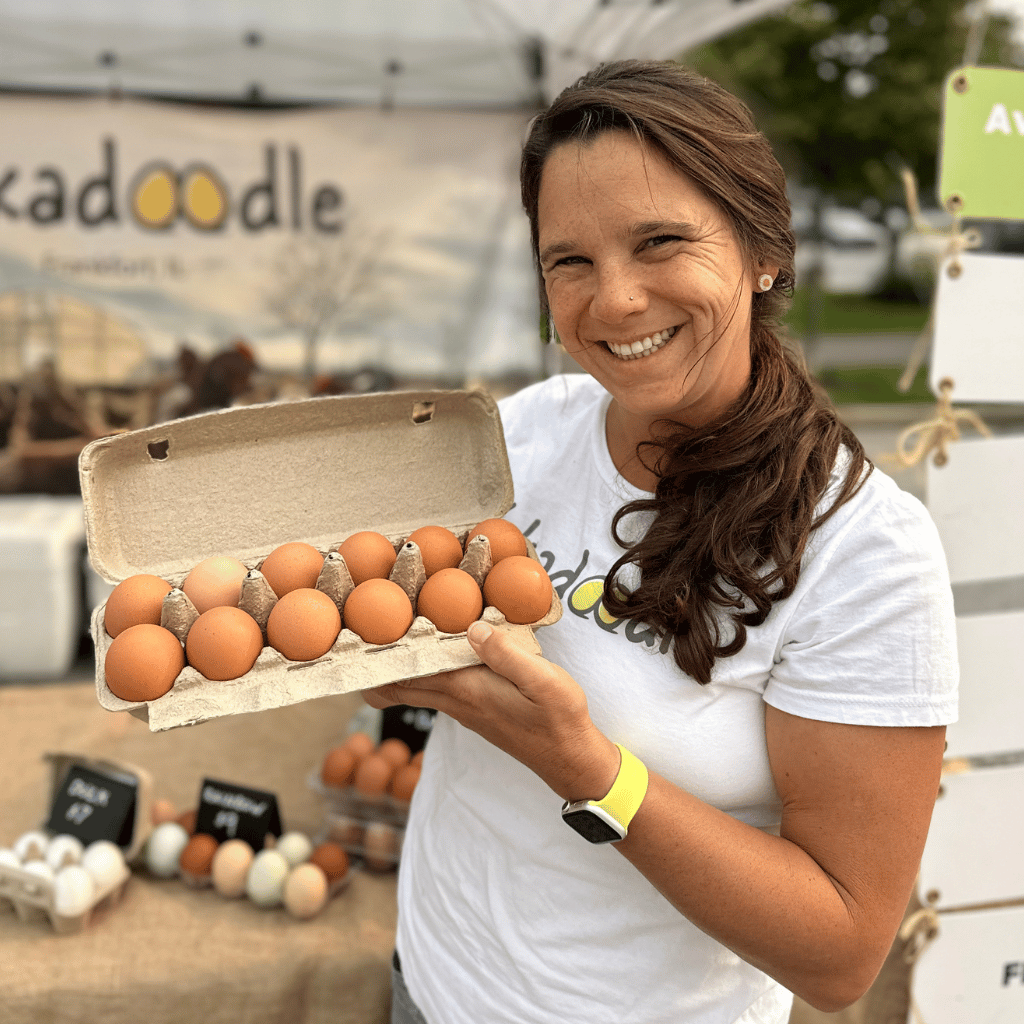
Building Kakadoodle has been a constant education in how our food system actually works. We spend a lot of time talking about things like PUFAs in chicken feed, glyphosate exposure, and how those choices quietly shape everyday health. That curiosity is foundational to why we started Kakadoodle, and it’s deeply personal for us.
When you live inside those conversations, your kids hear everything.
So it’s not uncommon for one of them to pick something up and ask:
“Is this full of chemicals?”
At home, we’re not rigid. We’re human.
You might even find us in the McDonald’s drive-thru. I know, blasphemy! For better or worse, our kids love it. We joke and call the happy meal “cancer in a box,” but it’s said with humor, not fear.
The way we talk about food with our kids is simple: we try to surround ourselves with clean food most of the time, and we remind them that anything in excess can be a problem.
Kakadoodle, though, is different.
For Kakadoodle, there is a clear chemical-free line in the sand. There are no McDonald’s-style exceptions being made. That standard matters, and it always has.
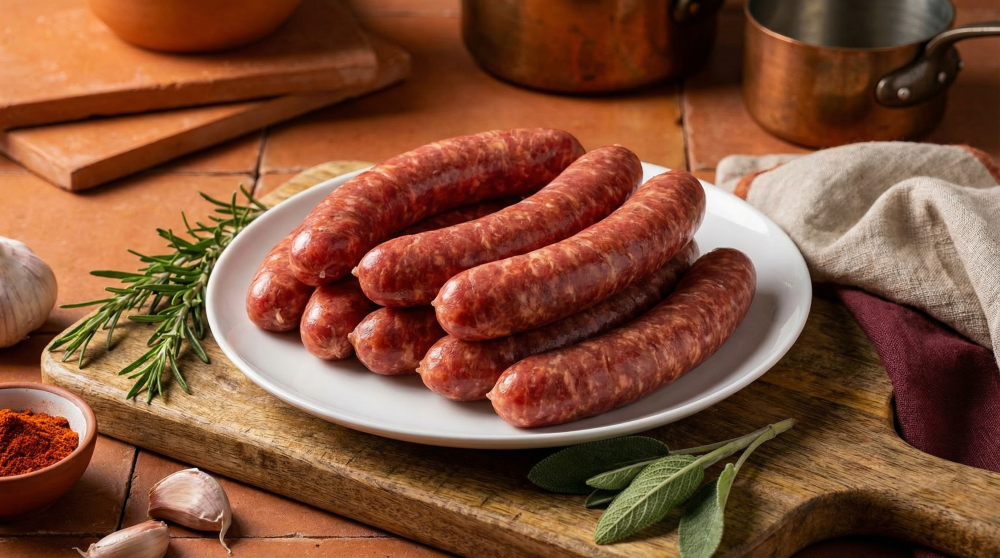
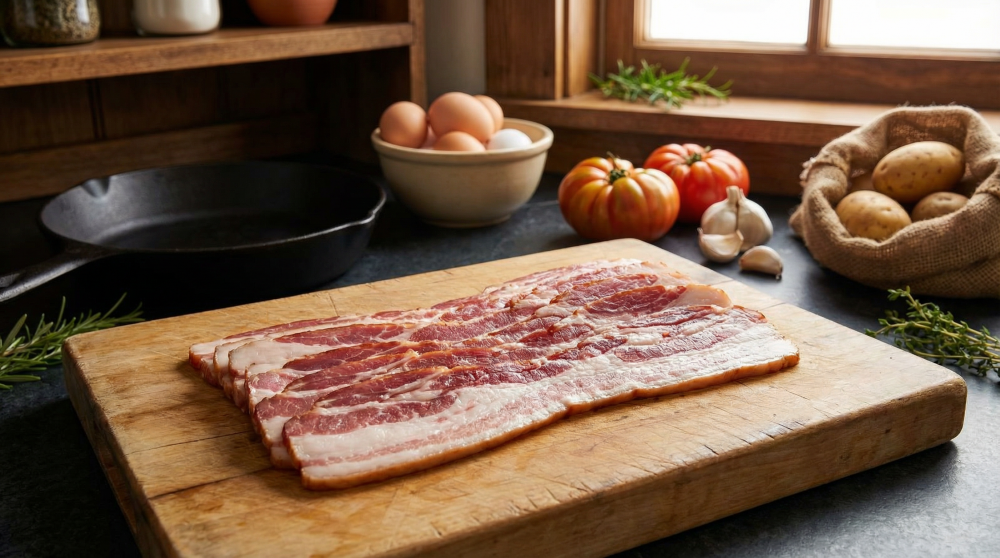
Recently, that line has been challenged by one of our most popular products: bacon.
For a long time, our rule was straightforward: uncured bacon only. As we’ve grown, sourcing that consistently has become harder, and it forced us to step back and ask more fundamental questions:
What is “uncured” bacon, really? Do nitrates matter the way we think they do? And what does “chemical-free” actually mean as a sourcing standard?
“Uncured” vs. “Cured”: the honest chemistry
Most of us have heard some version of this before: cured bacon contains nitrates, and nitrates are linked to cancer. That concern isn’t made up.
When nitrites are present in cured meat and exposed to high heat, they can form nitrosamines, compounds that have been linked to increased cancer risk. Importantly, that risk is tied to dose, frequency, and cooking method, not to an occasional food eaten in moderation.
(See: https://nutritionsource.hsph.harvard.edu/2015/11/03/report-says-eating-processed-meat-is-carcinogenic-understanding-the-findings)
Here’s the part that often gets misunderstood.
- “Cured” bacon uses sodium nitrite
- “Uncured” bacon typically uses celery powder or celery juice, which naturally contains nitrates that convert into nitrites during the curing process
Regardless of whether those nitrites originated from celery or from sodium nitrite, the body does not meaningfully distinguish between the two.
Which means that, in excess, both cured and uncured bacon can be associated with increased risk of cancer.
So should we even carry bacon at all?
Once you accept the reality that nitrates are nitrates, whether they come from celery powder or sodium nitrite, an uncomfortable but honest question follows:
If both forms carry some cancer risk, should we carry bacon at all?
That’s a fair question. And we didn’t brush it off.
Exposure to herbicides, specifically glyphosate, is very likely what gave me cancer. That experience set us out on this whole journey of getting clean food to people and permanently shaped how we think about food, risk, and trust.
So we sat with it.
And we debated it.
Overconsumption of nitrates has been linked to cancer.
Overconsumption of red meat has been linked to cancer.
You can make similar cases for coffee, cocoa, and plenty of other foods.
If our goal were to never carry a product with even the remotest association to cancer risk, we wouldn’t carry beef, pork, lamb either. And that’s not what we’re trying to do. It’s not realistic, and it’s not honest about how real people eat real food.
But that still leaves a harder question.
Sodium nitrite is a chemical.
So can we really still say we’re 100% chemical-free?
If “chemical-free” literally meant “contains no chemicals,” then no real food on earth would qualify. Water is chemistry. Salt is chemistry. Citric acid is chemistry. In fact, citric acid is often studied for its potential anti-cancer properties.
So maybe the work here isn’t to defend an impossible literal definition.
Maybe the work is to clearly define what we mean by “chemical-free” in a way that’s honest, consistent, and aligned with why we adopted that standard in the first place.
Olivia helped us zoom out
We recently talked this through with our mentor - Olivia Tincani, who has spent years deep inside the pork industry, and is a leader and advocate for the regenerative chemical-free movement. Her perspective helped clarify something important for us.
She challenged us not to get stuck in a narrow ingredient debate that distracts from the much bigger drivers of harm and health in our food system.
You can find uncured bacon coming from animals raised in confinement, fed questionable inputs, and produced in ways that degrade land. And you can find cured bacon coming from non-industrial systems that prioritize animal welfare, non-GMO feed, and land stewardship.
Her point wasn’t that nitrates don’t matter.
It was that context matters more.
That conversation sharpened our thinking.
The Distinction: System vs. Ingredient
This is the distinction that helped everything click for us.
When we talk about being chemical-free, we’re not making a claim about the absence of chemistry. Real food is chemistry. Water is chemistry. Salt is chemistry.
What we’re drawing a line around is system-level chemical exposure versus ingredient-level chemistry.
System-level chemicals are embedded upstream in modern industrial agriculture. They are used before food ever reaches a plate, are often invisible to consumers, and create chronic, unavoidable exposure over time. Glyphosate, synthetic pesticides, herbicides, and GMO feed systems fall squarely into this category. Once you participate in the conventional food system, you don’t opt into these meal by meal — you’re exposed by default.
Ingredient-level chemistry is different. These are substances that show up in specific foods, are visible on labels, and are tied to how often and how much something is consumed. Their risk profile is contextual, not ubiquitous. Nitrates in cured meat fall into this category.
That distinction matters.
Our goal has never been to eliminate every compound that could ever be questioned. That’s not possible, and it’s not how real food works. Our goal is to opt out of industrial chemical systems that remove choice, transparency, and trust from the food supply, while being honest about ingredients that require moderation.
So now what?
This post may make you reconsider eating bacon at all. And that’s fair. Personally, I’m going to continue to enjoy bacon — in moderation.
Based on everything we’ve learned, our current stance is to continue carrying bacon, even if cured. That doesn’t mean we think cured meats are harmless. Like most foods (and yes, especially McDonald’s!), they’re not something we believe should be consumed without thought or limit.
At the same time, we don’t believe these decisions should live in a vacuum. If you have experience or perspective that adds context to this conversation, we genuinely want to hear it.
What "chemical-free" continues to mean for us:
- animals are fed non-GMO feed
- glyphosate, pesticides, and herbicides are never used
- farming practices prioritize soil health, animal welfare, and long-term resilience
That’s the line we’re holding — and we believe it’s the one that gives people the most clarity, choice, and trust.